

Thematic Areas: Climate Adaptation
How many opportunities has Thailand missed to flip the script on environmental crises due to past policy directions...?
February 8, 2026: A decisive day for Thailand's future. Amidst a fierce electoral battlefield where economic policies dominate the conversation, there is one critical issue that cannot be overlooked: "The Environmental Crisis in the Age of Climate Change."
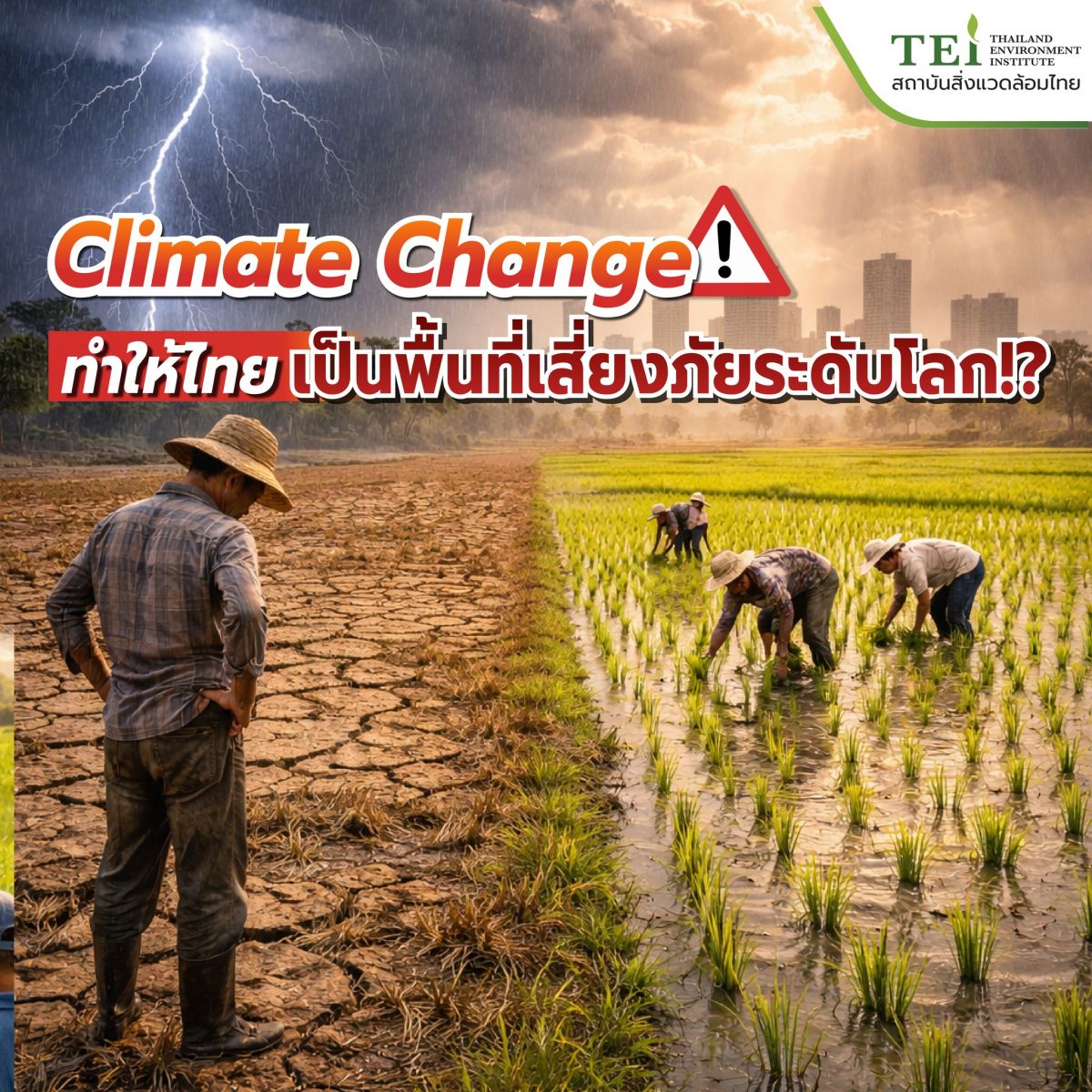
According to the Global Climate Risk Index (CRI), Thailand is ranked among the world’s most vulnerable countries (High Risk) regarding extreme weather impacts. This is not a threat—it is a statistical reality paid for with lives and massive economic losses.
While we head to the ballot box, natural disasters are "campaigning" with increasing intensity:
Rising Sea Surface Temperatures: Fueling more powerful storms and causing sudden, heavy downpours. This leads to recurring flash floods and runoff, devastating lives and property.
The PM2.5 Crisis: Bangkok and Chiang Mai have repeatedly ranked among the world’s most polluted cities. This impacts long-term public health, increases healthcare costs, reduces labor productivity, and cripples tourism during the "High Season."
Severe Droughts: Farmers are losing income as yields of economic crops plummet, triggering a ripple effect across the national economy.
Extreme Heat: Rising temperatures pose severe health risks, particularly Heat Stroke. Last year saw numerous fatalities, especially among outdoor laborers, while overall work efficiency has declined.
Coastal Erosion: Coastal communities are losing their homes and livelihoods. Businesses such as seaside restaurants and hotels are facing direct hits as the shoreline recedes.
These problems cannot wait another second. This election is not just about choosing an administration; it is about choosing our "Survival."
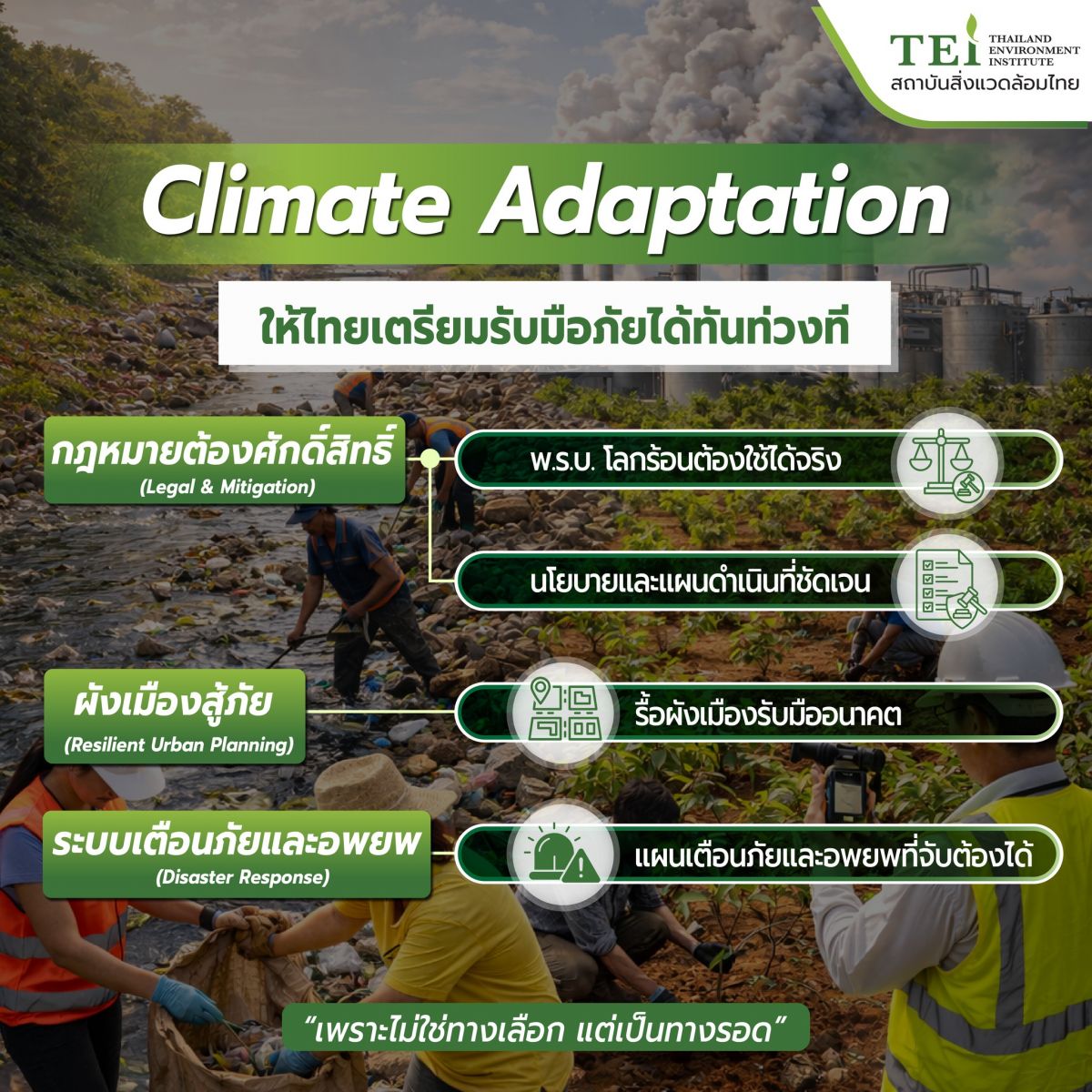
The Thailand Environment Institute (TEI) is committed to communicating Climate Adaptation for the public interest. Under the "Adapt to Live, Learn to Survive" framework, which aligns with the National Adaptation Plan (NAP), the government must prioritize these urgent agendas:
1. Rule of Law (Legal & Mitigation)A Functional Climate Change Act: Push for climate legislation that enforces a Carbon Tax and mandatory carbon reporting. These tax revenues should feed a "Climate Fund" to assist citizens in adaptation, alongside the enactment of the Clean Air Act.
Clear Roadmaps: Establish transparent policies and action plans involving multi-sectoral collaboration, with regular monitoring and evaluation.
Overhauling City Layouts: Ban construction that blocks waterways, increase green spaces to act as "sponges" for water absorption, and design cities for Urban Cooling to mitigate Heat Waves.
Tangible Evacuation Plans: Warnings should go beyond "it will rain" to specifying "evacuation routes" and designated shelters. Regular emergency drills with communities are essential, alongside organized aid for food and necessities.
As long as Thailand faces the endless cycle of Climate Change, a government that elevates the environmental crisis to a National Urgent Agenda is vital. This is the only way for the people and the nation to move forward with resilience.
This February 8, use your vote. Choose a party that dares to confront "Global Boiling" so that Thailand can advance steadily... and we can all "Survive" together.
References:
Global Climate Risk Index (Germanwatch): https://www.germanwatch.org/en/cri
Thailand Climate Policy Analysis (101 PUB): https://101pub.org/thailand-climate-policy/
Environmental Situation and Elections (SiamRath/Thansettakij): https://siamrath.co.th/article/articles-analysis/120692

Share: