
Thematic Areas: Climate Adaptation
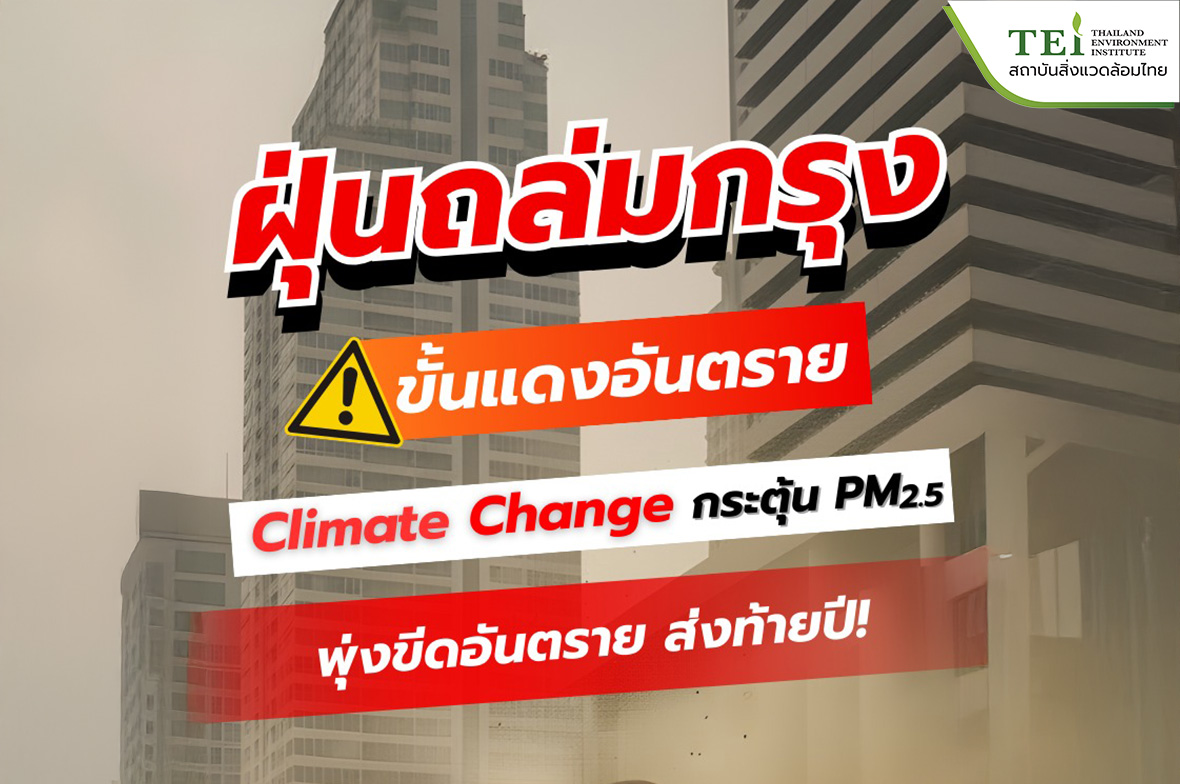
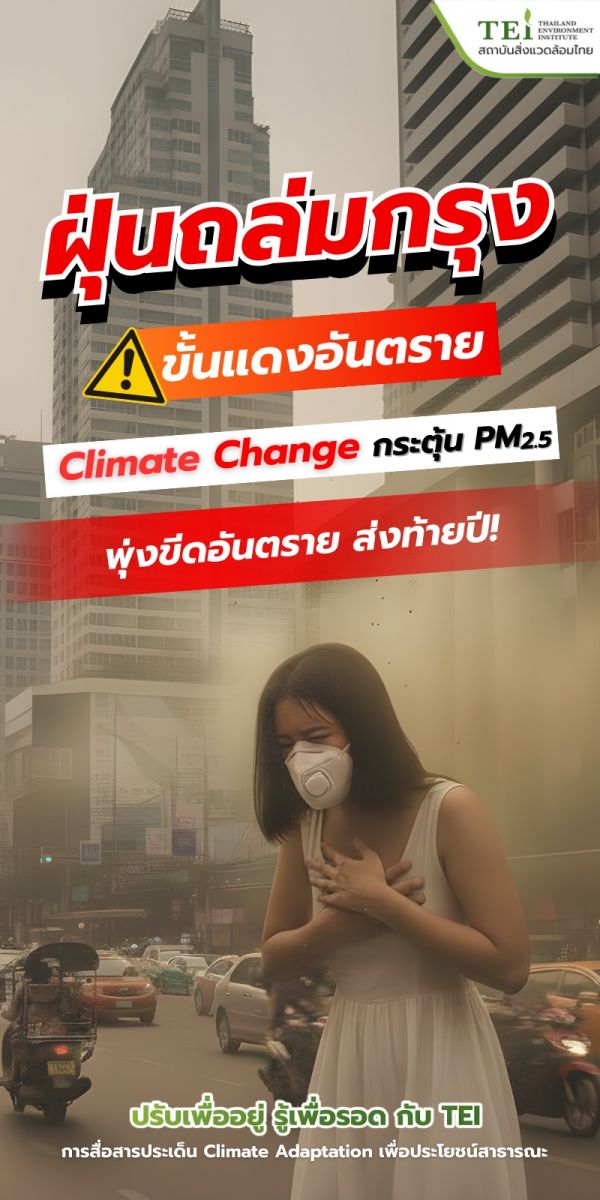
Dust Levels Continue to Exceed Standards as Year Ends: Once-Clean Air Becomes a Toxic Threat We Cannot Ignore.
The toxic PM 2.5 situation in Thailand has returned, escalating to a critical level with 5 provinces now in the "Red Zone"!
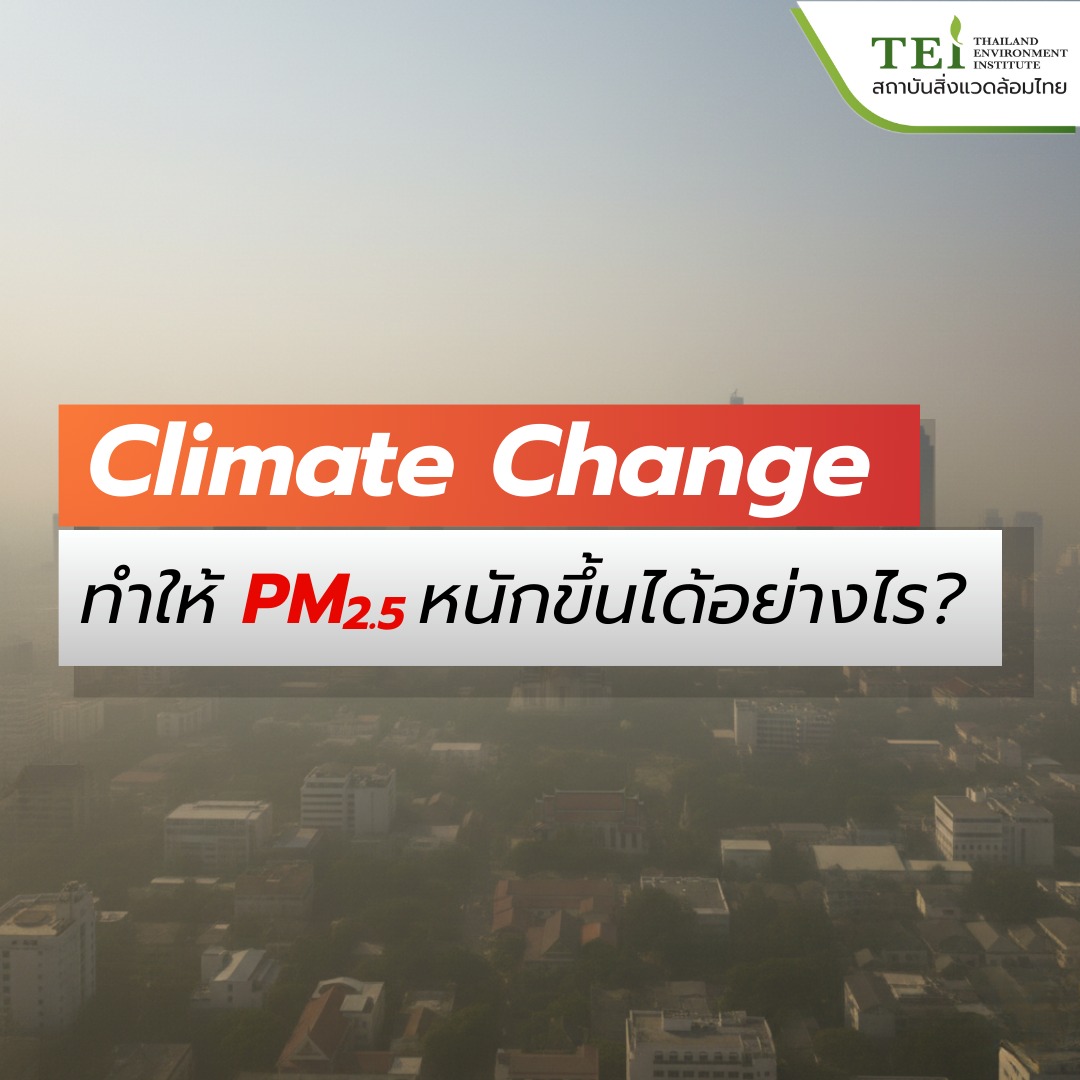
The Thailand Environment Institute (TEI) highlights data from late 2025, showing that Thailand is still facing chronic toxic dust problems and continuous severity. When combined with the Climate Change situation, it further reinforces the crisis and increases the intensity of PM 2.5.
On December 1, 2025, at 06:00 AM, data from GISTDA via the "Check Foon" (Dust Check) application revealed that Thailand's air quality is at a worrying level. Starting December 2025, dust levels in many districts of Bangkok exceeded 100 micrograms/cubic meter, with signs of becoming even more severe. This is partly a problem driven by Climate Change!
Surrounding Provinces are Hit Too! The 5 provinces with the highest "Red Level" dust values—which are dangerous to health and the respiratory system—include Samut Sakhon, Nonthaburi, Bangkok, Samut Prakan, and Pathum Thani.
Additionally, 41 other provinces are at the Orange Level, beginning to affect health, especially for vulnerable groups. This situation reflects that toxic dust is not just bombarding the capital city but is spreading across many provinces nationwide.
Rising Temperatures: Accelerate chemical reactions in the atmosphere, increasing the quantity of toxins and their dispersion, making it easier for the body to absorb them, thus increasing health risks.
Drought & Heat: Dry conditions increase the risk of open burning, which is a major source of PM 2.5.
Temperature Inversion: Poor air buoyancy, atmospheric pressure, and "closed" weather conditions mean less ventilation. Pollutants accumulate in areas beyond standard limits.
Wind Direction: Wind patterns reinforce transboundary haze, increasing pollution concentration.
PM 2.5 has serious long-term health consequences, particularly on the respiratory system, causing inflammation, breathing difficulties, coughing, sneezing, nasal itching, and triggering allergies. It also affects the blood and heart systems. Furthermore, it damages the immune system, making people fall ill easily, and leads to subsequent conditions such as skin irritation, eye inflammation, and can even affect child development.
Every year, the PM 2.5 problem doesn't go away; it only fluctuates. Therefore, preparedness is the path to survival in weathering this annual crisis.
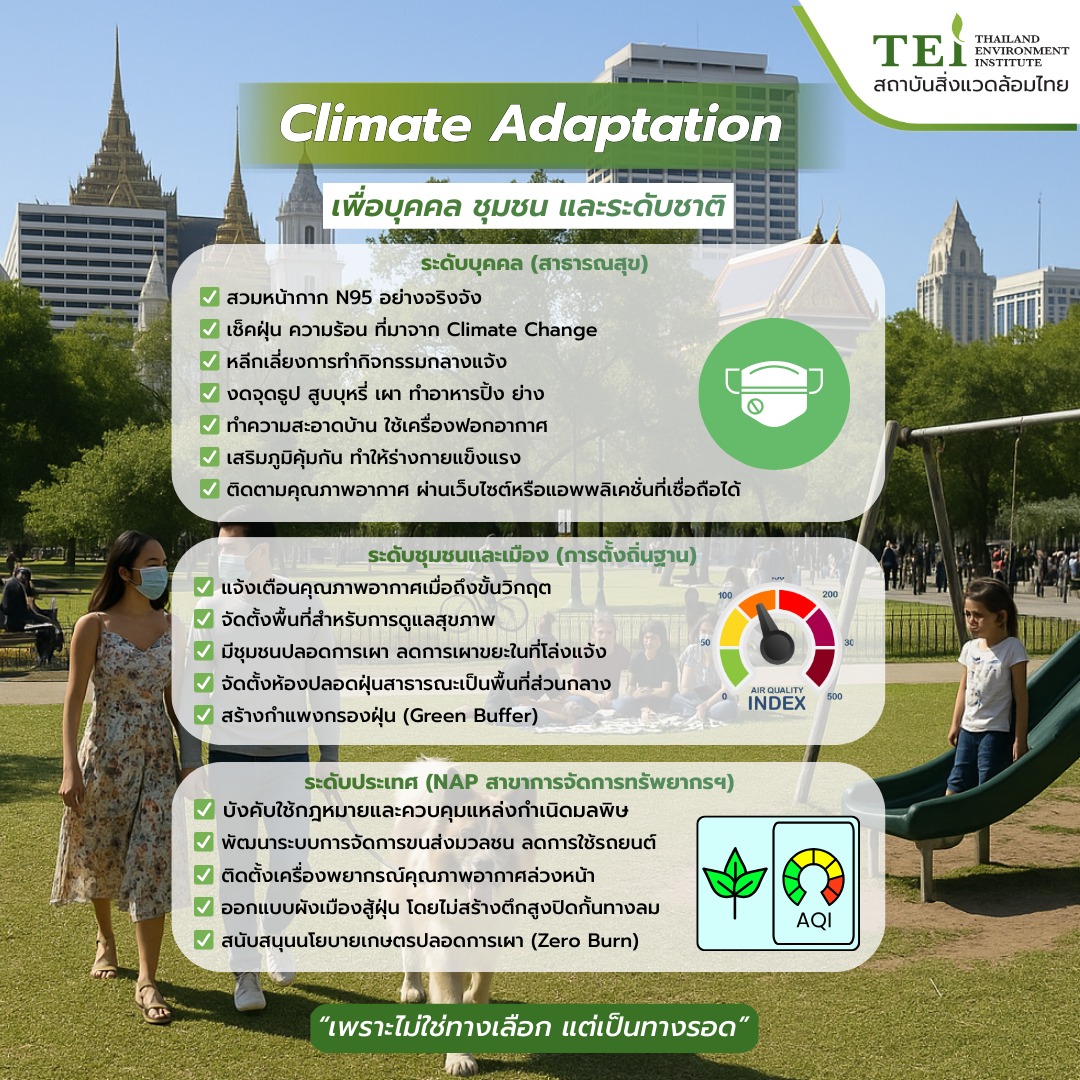
The Thailand Environment Institute (TEI) proposes guidelines for Climate Adaptation under the concept "Adjust to Live, Know to Survive," divided into 3 levels:
1. Individual Level
Wear N95 masks seriously when going outside to prevent dust inhalation.
Check dust values paired with heat. Climate Change makes the air hotter, which causes fatigue and makes the body absorb toxins more easily. Avoid outdoor activities when High Dust + Extreme Heat occur.
Avoid or reduce time spent on outdoor activities.
Stop dust-generating activities, such as lighting incense, smoking, burning trash, or grilling food.
Make your home a "Safe Zone." Clean frequently by wet mopping to reduce dust circulation. Having a "Dust-Free Room" or using an air purifier is even better.
Boost immunity. Eat antioxidant-rich foods and get enough rest to keep lungs and heart strong against pollution.
Monitor air quality via Air4Thai website, pcd.go.th, or the Air4Thai app regularly.
2. Community and City Level
Communicate and Alert residents about critical air quality, especially vulnerable groups like childcare centers or homes with bedridden patients.
Establish Health Care Areas for community members affected by PM 2.5.
Zero-Burn Communities. Cooperate to monitor and stop the burning of garbage and other materials in open areas.
Establish Public "Clean Air Shelters" in common areas like community libraries or town halls for people who lack equipment.
Create "Green Buffers." Communities should help plant trees with thick or hairy leaves (e.g., Jamaican Cherry, Rain Tree) around the area to help trap dust and lower the temperature.
3. Agency and Government Level
Enforce laws and control pollution sources. Set clear regulations to control emissions from factories, vehicle exhaust, and open burning.
Develop public transport systems. Reduce private car usage and facilitate better public transit options.
Install advance air quality forecasting systems to prepare the public.
"Dust-Fighting Urban Planning." Design cities without high-rises blocking wind channels, allowing natural wind to disperse dust and preventing "Temperature Inversion" (the dome effect).
Zero Burn Agriculture. Support machinery and budget for farmers to manage agricultural waste without burning, tackling the biggest root cause of PM 2.5.
Surviving the Dust Season
The Thailand Environment Institute (TEI) stands as an organization prioritizing communication on Climate Adaptation for the public benefit. We urge citizens to prepare for environmental situations following the "Adjust to Live, Know to Survive" approach at the individual, community, and government levels, to help reduce triggers and health risks from PM 2.5 together.

Share: